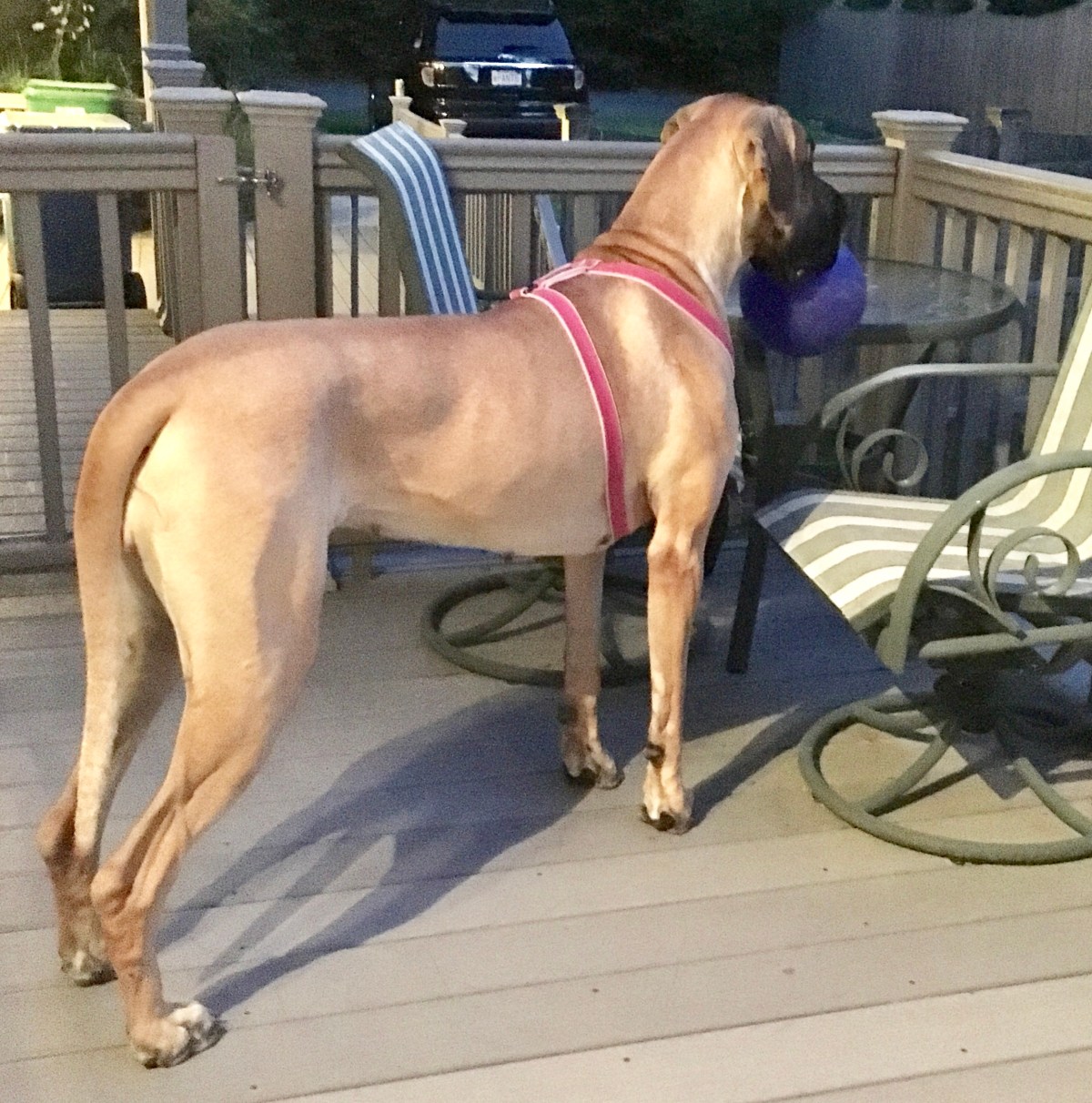
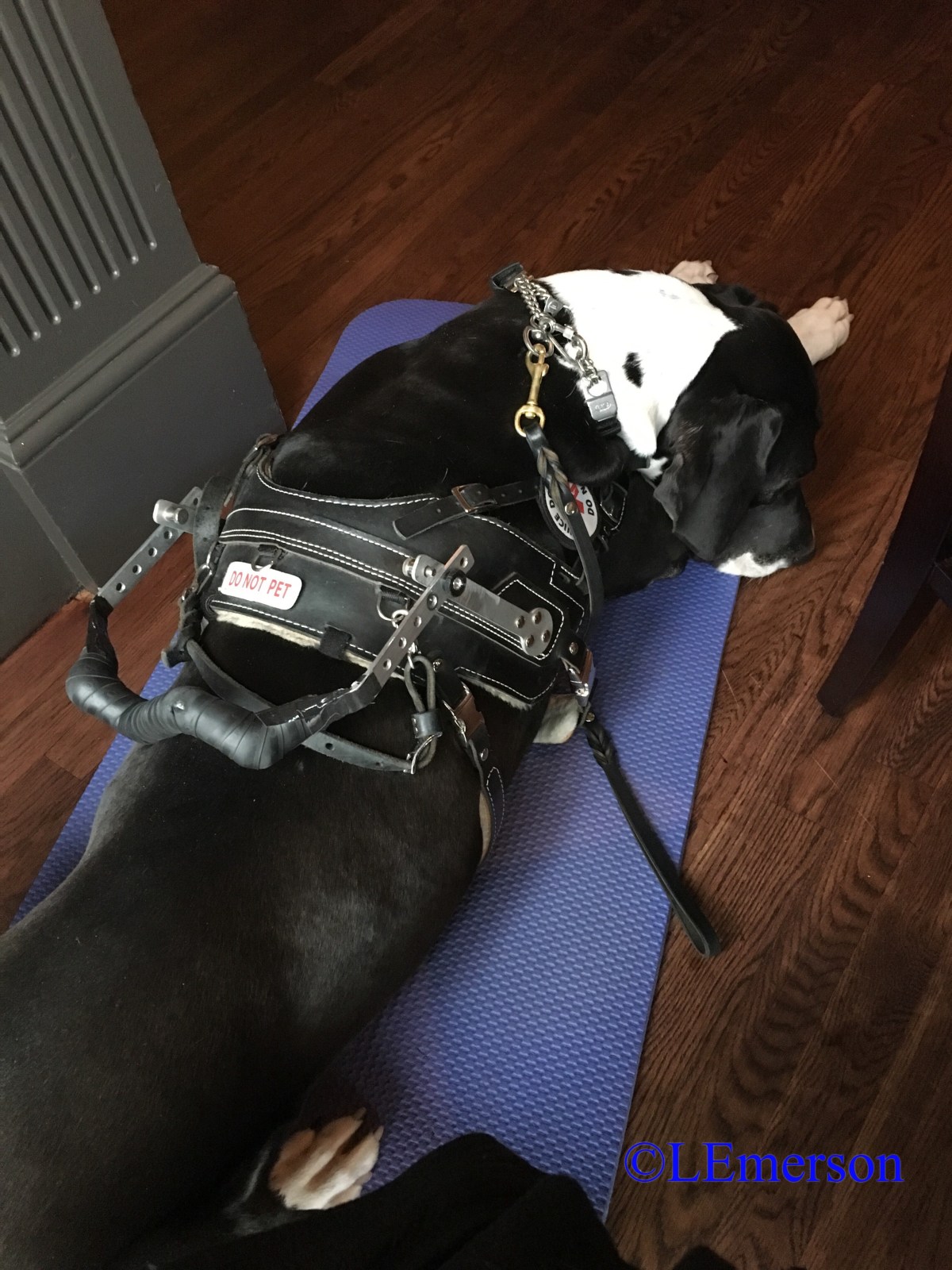
I decided to finally publish this on the one year anniversary of the day Matilda’s life changed forever. I do it as a way to honor her. Honor everything she is and provides me. After almost two years of training Matilda began working last year on her birthday as my service dog. And she is remarkable. Balanced, patient, fearless, loyal, fun loving and always willing to assist me flawlessly. So to honor her, I will finally tell the story of the past year in the hope of saving even one other dog the same fate of Matilda.
I live with MS, I have survived breast cancer multiple times and yet nothing can compare to the nightmare that began the morning of July 7, 2018.
It began with one, single innocent sounding cough. Almost as if she was clearing her throat. It was Matilda. My amazing, beautiful, 27 month old Great Dane Service Dog that actually had just begun working in April. She is magnificent. Everything you could ask for in a Service Dog. Confident, well balanced, unbelievably well trained, loves to work and just an absolute dream. If she has a flaw, it is that she is too friendly. I’ll take that any day. So it shouldn’t be a surprise that when she “coughed” I immediately grabbed my stethoscope. She is my life. My absolute love.
Previously in June she had been diagnosed with very mild Mitral Valve Dysplasia. I thought that was bad enough. However, it was very mild and there were no restrictions or medications required at that time. It would affect her later in life and I went through about a week of grieving what was to come years out. If I only knew what was to come in just thirty days.
Given that diagnosis I was even more “attune” to any changes in her breathing or heart rate. I would listen carefully. I heard perhaps minor changes but nothing alarming initially. She was behaving normally. Playing with Willow. And eating and drinking normally. However, I decided to find a new cardiologist. Her cardiologist had moved out of state. Finding a new cardiologist was no easy task. All the cardiologists were booked months out. This wasn’t helpful. After speaking to someone at Tufts I felt somewhat reassured. The weather had been extremely hot with high humidity. She explained that the weather could be setting her off. if she was not restless at night, most likely it was not a cardiac issue. She was sleeping fine. However, I made an appointment with our regular vet just to have her checked.
That night, well actually 4:00 am, she “coughed” once. More like clearing her throat actually. It made no sense. She had been playing with Willow the night before with absolutely no coughing or exercise intolerance. I once again took out the stethoscope. Now I heard changes that were more worrisome. VERY worrisome. I called her vet as soon as they opened and explained I wanted to bring her in as soon as possible. Oddly, she was behaving normally. she ate breakfast. she went outside to potty. She was happy. she did not “look” sick.
Before loading her in the car I listened again with the stethoscope. What I heard now was absolutely horrifying. I heard an irregular heart rhythm and “crackling” in her chest. This was a dog in serious trouble. Yet, she still “looked” fine. I probably looked worse than her given my worry and stress.
We arrived at her vet and she walked in wagging her tail, looking every bit like the Matilda they were used to seeing. I actually said “Feel free to put me on a psych hold but, this dog is seriously ill.” I know they were skeptical. Dr. Kruse quickly examined her and I could see the look on her face. I asked if she heard what I heard. She said yes. We needed to do a chest x-ray. I knew where we were headed. I tried to steady myself for what was to come but I had no idea….
The chest film was terrifying. It was basically “whited out” meaning her chest was filled with fluid. She was in heart failure. I was beginning to feel physically ill. Dr. Kruse asked if I’d been feeding grain free. Oh god! Yes! And I also knew why she was asking. I’d just read the article by Dr. Lisa Freeman from Tufts. “A Broken Heart” regarding grain free foods and DCM. I’d actually decided to change food. I was too late! I burst into tears. “I did this to her! This is my fault!” I had fallen for the marketing and chosen poorly and now my gorgeous, beloved girl was paying for my bad decision. Ironically, I received a notification that her new food was delivered as we were there. Again, too late. How was I ever going to be able to live with this? I had chosen and fed her the food that caused her heart failure!
Thankfully, The entire office flew into emergency mode as we tried to locate an ER with a cardiologist on site. It was a Saturday. In the interim, Dr. Kruse administered IV Lasix to begin off loading the fluid.
We found a cardiologist at Angell in Boston. They would be expecting us and I would drive like mad.
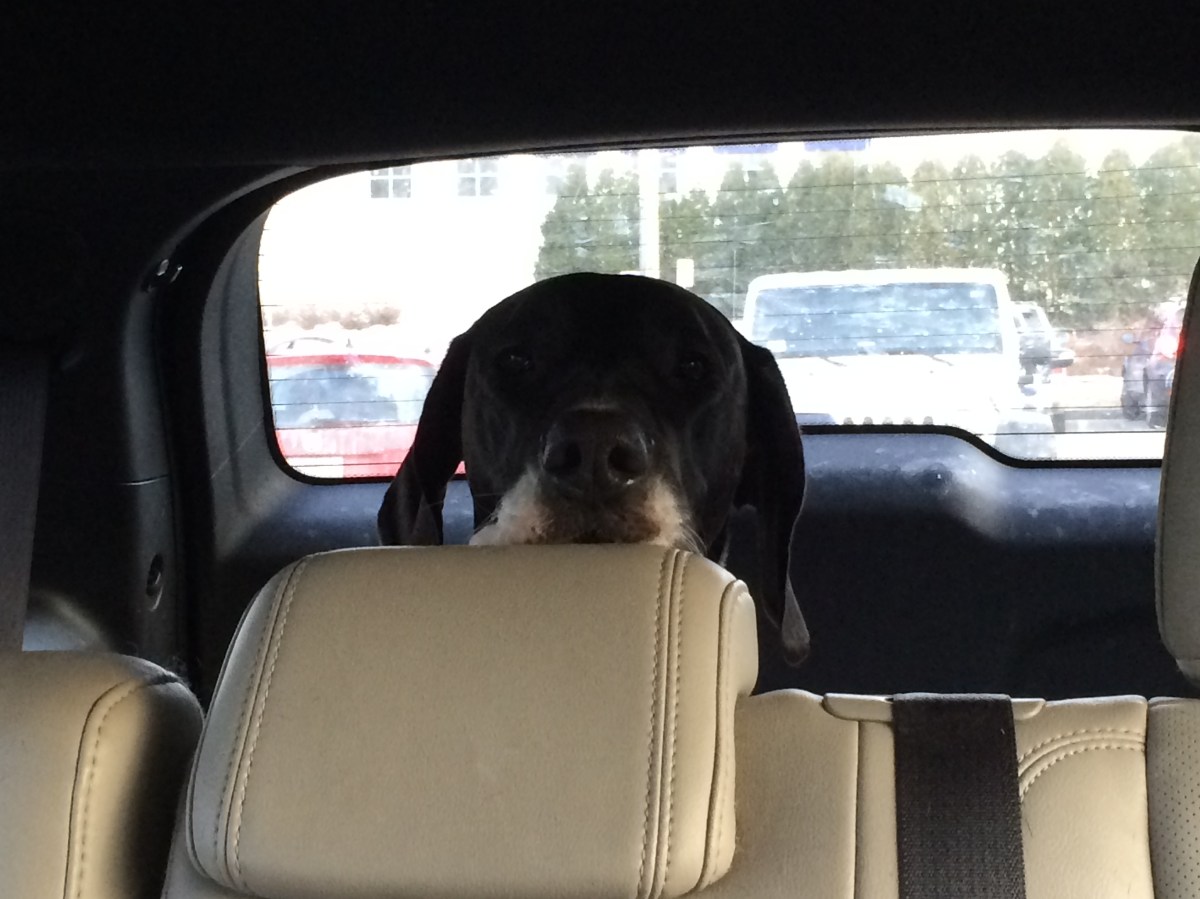
On the way, poor Matilda peed about two pounds of fluid out in the back of the Explorer. I had no where to stop and honestly, I didn’t care. My focus was getting her there. I knew she was at risk for sudden death. She was more bothered by it than I was. The car could be cleaned and/or replaced (both occurred), she could not.
Upon arriving at Angell, they were in fact not prepared. I had her chest x-ray and explained she was in heart failure. The first tech that triaged her dismissed us to wait in the waiting room. I flipped out. I went full Shirley McLaine from Terms of Endearment on the poor girl. I explained in no uncertain terms that I wanted a vet, not a tech, to triage her, NOW!! A vet (intern) appeared and very quickly realized she in fact, needed immediate attention. She took her to the back to begin treating her. I was now dismissed to the waiting room. I was a mess. I was sobbing uncontrollably. A combination of guilt and fear. I was also just ten days post-op myself. I was constantly on the verge of passing out from pain.
Finally. an intern came to retrieve me and take her history. I really tried to be patient. However, vet schools like human medical schools begin their internships and residencies on July 1. This was a recent graduate with very little clinical experience and I had a very sick dog. She fumbled through the history (and actually made a couple mistakes that were reflected on Matilda’s record) and had NO knowledge of diet related DCM. NONE. I lost it. I finally said “I’m going to give you a list of differential diagnosis as well as her cardiac history to take to cardiology. I wrote them down. “Now take it to them NOW! Run!”
Frustrated, angry, afraid and absolutely lost, I found my way back to the waiting room. I looked around at all the people with their dogs. I didn’t want to socialize. I wanted to be left alone. I spotted a guy who I thought no one would sit near. Big guy, huge pit bull. looked like he could snap you in two with one hand. That’s my guy I thought. No one is going to sit near him. I went and sat next to him. His name was Ovie (sic). Turns out, Ovie was hysterical and just what I needed. I spent many hours on a wooden bench with Ovie who seemed to immediately understand my fear, helplessness and utter sense of loss. He talked to me about Matilda, shared his feelings for his dogs and then made me laugh during this horrendous time with hysterical self effacing humor.
Finally after many hours I got to speak with the cardiologist. Matilda was in congestive heart failure with dilated cardiomyopathy (DCM). It made no sense. 30 days prior she had no signs of DCM. Yet, here we were. She was extremely sick. The cardiologist felt strongly it was diet related. My guilt washed over me. Had I killed my gorgeous, perfect dog because of a bad decision? The cardiologist want to run more tests including Taurine (diet) and other PCR vectors to rule out infection. In the interim, we would treat her as diet related DCM. Again the guilt came. She would have to remain hospitalized for at least two to three days. Thankfully, she was not in aFib. She just was so tachycardic you couldn’t tell until they did an ecg.
They wanted to begin Taurine supplements immediately while she remained in the hospital. Of course, they didn’t have Taurine. I would have to get it and bring it to the hospital. I also had to bring her food. As I was leaving to go get everything and bring it back my new friend Ovie stopped me. He asked if I would be doing these things alone. I said yes. He actually offered his assistance. I could tell he was genuinely concerned. I assured him I would be fine and thanked him for his concern. To this day, I’d like to find this man and truly thank him for helping me get through that day. I had been alone and more frightened than I had been in a very long time. This stranger made that day bearable.
Matilda ended up being released from the hospital early. After a day and a half, it was apparent to them she was more stressed being separated from me which was counter productive. She also had responded well to treatment and had off loaded much of the fluid in her chest. She would be coming home on cardiac medications and lasix. We would transition her diet to a safe food and supplement her Taurine. If in fact this was diet related, she could hopefully recover. Her cardiologist had treated other dogs with diet related DCM that actually had fully recovered. However, we probably wouldn’t see improvement for six months. I was devastated. She couldn’t run or play, no work and I had to closely monitor her respiration and heart rate. She would need blood work to check the affect of the medications on her kidneys and repeated chest films initially to ensure the fluid was not returning.
The first week at home was brutal. She wouldn’t eat because of the medications. I actually had Wegman’s delivering all kinds of meats and tuna in a effort to get her to eat something. Anything. I thought “what must the delivery person be thinking? 30lbs. of ground beef?” Finally, her regular vet had a great trick up her sleeve called Entyce. It worked! One dose and she ate! I also split up her medication so she wasn’t getting it all at once. Next issue? A Great Dane on lasix.
There is nothing like a Great Dane with fluid to off load, on reasonably high doses of lasix. Regardless of how well housebroken the dog, there will be accidents. Why? Because ironically, they need to constantly drink and they do. I stocked up on chux and began many sleepless nights of taking my full grown dog out multiple times to pee. It was probably two months before she actually made it through the night without needing to go out. By then we had also decreased her lasix.
However, I still wasn’t sleeping. I was constantly checking her heart rate and respiration to ensure she wasn’t going into heart failure again. I would listen carefully with my stethoscope for any sign of fluid. We had one “scare” a few weeks in when we believed she had some fluid return. Thankfully, her chest x-ray showed only minor changes that her cardiologist agreed we could handle with adjusting her lasix. Yet everyday was terrifying.
When I wasn’t checking her heart rate and respiration or taking her out, I was researching this issue like mad. I pulled all the research I could find. Matilda’s case was reported to the FDA immediately. That gave me insight into who was doing research and the fact that this was an issue to be taken seriously. I found work by Dr. Joshua Stern. He and Dr. Freeman had the most information published in recent literature. Then I found Dr. Joshua Stern. He was actually an admin of a Facebook group. Taurine-Deficient Dilated Cardiomyopathy. I joined immediately. The information was invaluable. However, the reality hit me as well.
There is a beautiful Golden Retriever named Oliver who is truly the face of what is now called NM-DCM. (Nutrionally Mediated DCM) Oliver was a gorgeous, playful full of life Golden that was absolutely loved by his owners Julie and Bruce Carter. At just four years old, Oliver had just received an encouraging echo and exam at the cardiologist. The next day this wonderful, gorgeous boy passed away just five feet from his owner. Sudden death. A very real symptom of this horrendous disease. I read Oliver’s story with tears flowing down my face. I knew that could be Matilda. It could be any dog with this disease. And that reality has never left me.
The first month was spent back and forth to Angell to check her progress. She was remaining stable. The fluid remained off loaded and she was cleared to return to work. She would still have exercise restrictions. That was going to be just awful for her. She absolutely loved to play. She was just over two years old and running the yard was one of her favorite things. She would have to adjust. I wasn’t going to lose her due to poor judgement. My bad food choice already got us here. Again, the guilt grabbed me by my very core. “It’s my fault she can’t run and play. I did this”
She also now would be subjected to frequent blood tests to monitor kidney and liver function due to the medication she was on. She has never minded going to the vet but I certainly didn’t want that to change nor was I thrilled at the prospect of her being subjected to that. Again, the guilt.
Finally at the two month mark she was seen at Tufts. I had decided to transition her care to Tufts as they were doing research on this issue and had the most experience. Her Taurine test had come back low and all the tests to rule out infection were negative. It certainly appeared diet related. We met with Dr. Cunningham who explained that at two months there most likely would be no change. This would be a baseline exam for them. I had brought all of her previous echocardiograms and records. They took Matilda off to perform the exams and I went off to the waiting room to wait and worry.
After what seemed like forever, the student working with Dr. Cunningham came and got me. I was actually dreading the results. Surprising to everyone she had already improved! She still had DCM but her heart function and size had both improved! I couldn’t believe it! She still couldn’t run laps but she could play in the house now. I felt like I could actually take a breath even if just for a moment. We would re-check her in two months.
November came and I waited nervously again while they examined her. Again she had improved. Not by leaps and bounds but there was improvement. We were trending in the right direction. We also could decrease her lasix further. We also decided to re-test her Taurine. Her Taurine came back high/normal so it was decided to decrease it somewhat. We would check her again in two months.
January came and this time I was somewhat optimistic. Bad decision. She hadn’t improved since November. In fact, there may be a very slight increase in size in the left ventricle. Her proBNP was back up. I was devastated. But I immediately thought, Taurine! We had decreased it! I told Dr. Cunningham I was going back to the original dose. She wasn’t sure she agreed with my assessment but agreed it wouldn’t hurt. We’d check again in two months.
The end of March couldn’t get here soon enough. I was fraught with worry. She seemed stable but only the echo could tell the story. Once again I sat nervously while they took my girl off for her exam. When they returned I wasn’t sure I wanted to hear the result. But I did. She….had….improved! I immediately said “Taurine!” Dr. Cunningham still wasn’t 100% sure but she couldn’t disagree. However, something still bothered me. It always had. I asked the question I’d asked before. “How did this dog go from having an echo on 6/6/18 with no DCM to being in heart failure with DCM 0n 7/7/18?”
Unfortunately the answer was there all along. She actually did have very mild DCM on 6/6/18. We realized that when her measurements on her March Echocardiogram were actually smaller than the previous June Echocardiogram. It was so mild, it was missed. But it was an example of how quickly heart failure can occur. Literally 30 days.
So here we are a year later. During this year I’ve not only had to care for my beloved service dog, I’ve also been subjected to comments and attacks from people who don’t want to believe this issue exists. I’ve been told “she’s a Great Dane, they just get DCM and she won’t live beyond a year.” I’ve left groups on FB for the same reason. I’ve been criticized for scrupulously researching her pedigree for heart issues. (I should note, her amazing breeder has been incredibly supportive. She has responded extremely responsibly to all the information and has worked to become more informed and educate others.) I’ve also been fortunate to meet some amazing people. Brought together because of this horrendous disease. People like myself who believe this is a travesty that can and needs to stop.
And may I please just comment on these breed groups who wish to insist that the issue is only a hereditary one. You are doing a great disservice to your breeds. Responsible breeders should be trying to preserve their breed. That includes becoming aware of and recognizing all health threats. A breed having a predisposition to primary DCM doesn’t preclude them from developing NM-DCM. Wake up and stop preventing people from obtaining valuable information that may well save their dog’s life. It’s time to check egos at the proverbial door.
So one year later, Matilda had her check up. She continues to improve. Her heart measurements are smaller and her function is better. She’s stable. She actually even just underwent surgery to be spayed and did beautifully under anesthesia. Will she ever return to “normal?” Most likely not. But no one knows. What we do know is this is preventable. No one has to live through the nightmare we’ve lived through and continue to live with.
PLEASE feed your dog a food from a manufacturer that meets WSAVA guidelines until this is sorted out. Those are Purina, Science Diet, Royal Canin and Eukanuba/Iams.
For more information on how to prevent NM-DCM or what to do if you’ve been feeding a “BEG” diet, below are some great resources. I sincerely encourage you to take this issue seriously. It truly is a nightmare when it happens to you. And it’s a nightmare you’ll not wake up from.
For Matilda and all the other dogs fighting and lost to NM-DCM.💔
https://www.facebook.com/groups/TaurineDCM/?ref=share
https://www.fda.gov/animal-veterinary/news-events/fda-investigation-potential-link-between-certain-diets-and-canine-dilated-cardiomyopathy
https://avmajournals.avma.org/doi/full/10.2460/javma.253.11.1390
https://www.wsava.org/WSAVA/media/Arpita-and-Emma-editorial/Selecting-the-Best-Food-for-your-Pet.pdf
 wilamenapants